As data becomes increasingly fragmented and operational processes grow more complex, AI is gradually emerging as an infrastructure layer that enables enterprises to transform scattered data into contextual insights, optimize resources, and maintain 24/7 operational capability. To understand how AI can be effectively integrated into an organization, it is essential to first examine the real challenges businesses are facing.
Challenges and how AI addresses them
1. Data and decision-making challenges
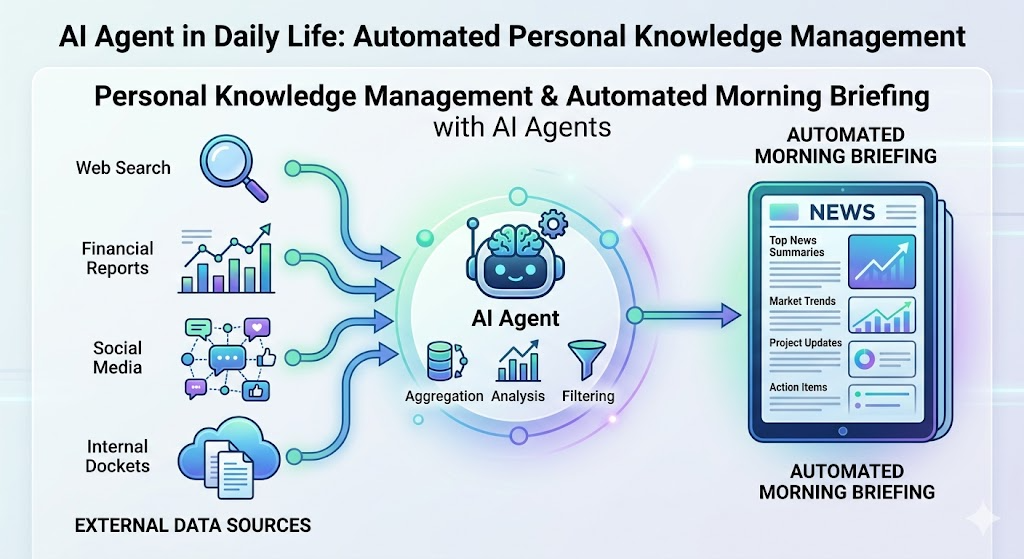
In most enterprises, data exists everywhere: ERP, CRM, HRM systems, emails, internal documents, Excel reports, websites, mobile applications, and even images and videos. However, this data is often distributed across multiple systems, inconsistent in format, and difficult to consolidate into a comprehensive view.
AI addresses this challenge by acting as an intelligent analytical layer on top of existing data infrastructure. When properly integrated, AI can automatically aggregate data from multiple sources, standardize it, and generate reports in near real-time.
Specifically, Machine Learning and Deep Learning models can process large volumes of data, detect behavioral patterns, anomalies, and predictive trends. Meanwhile, Natural Language Processing (NLP) enables AI to understand and extract information from unstructured data such as emails, contracts, reports, or customer feedback.
2. Operational and optimization challenges
One of the most significant issues in enterprises is the existence of manual, repetitive processes that heavily depend on human intervention. Performance often varies by individual and lacks long-term stability. In manufacturing environments, defect inspection frequently relies on human vision, leading to errors due to fatigue or inconsistency.
AI can intervene at multiple layers within the operational chain. When combined with Robotic Process Automation (RPA), AI can automate business workflows such as data entry, invoice processing through OCR, or contextual data reconciliation.
In manufacturing, Computer Vision enables systems to detect product defects with high accuracy, including subtle deviations that are difficult for the human eye to identify.
At a higher level, AI can integrate with IoT systems to collect sensor data, analyze it in real time, and predict equipment failures before breakdowns occur (predictive maintenance). In this case, operations are not only automated but also optimized based on data intelligence.
3. Customer experience challenges
Modern customers expect fast, accurate, and personalized support. However, businesses often struggle to maintain a 24/7 support team with consistent quality. Highly specialized personnel are limited, and scaling teams significantly increases operational costs.
AI, particularly Large Language Models (LLMs), enables the development of chatbots and virtual assistants capable of supporting customers across multiple channels. These systems can integrate with websites, mobile applications, and social platforms such as Facebook, Zalo, WhatsApp, or X.
AI does not merely respond to simple inquiries but can also retrieve information from internal knowledge bases to handle more complex questions.
Implementation Approach and Technical Architecture: From Planning to System Design
After identifying the AI challenges within an enterprise, the next step is not selecting tools immediately, but building a structured implementation plan. AI integration requires close collaboration between the enterprise and the technology development partner, where business objectives must be translated into a clear technical architecture.
1. Implementation plan: A 7-step AI integration roadmap
An AI integration project typically follows seven structured steps to ensure system stability and risk control.
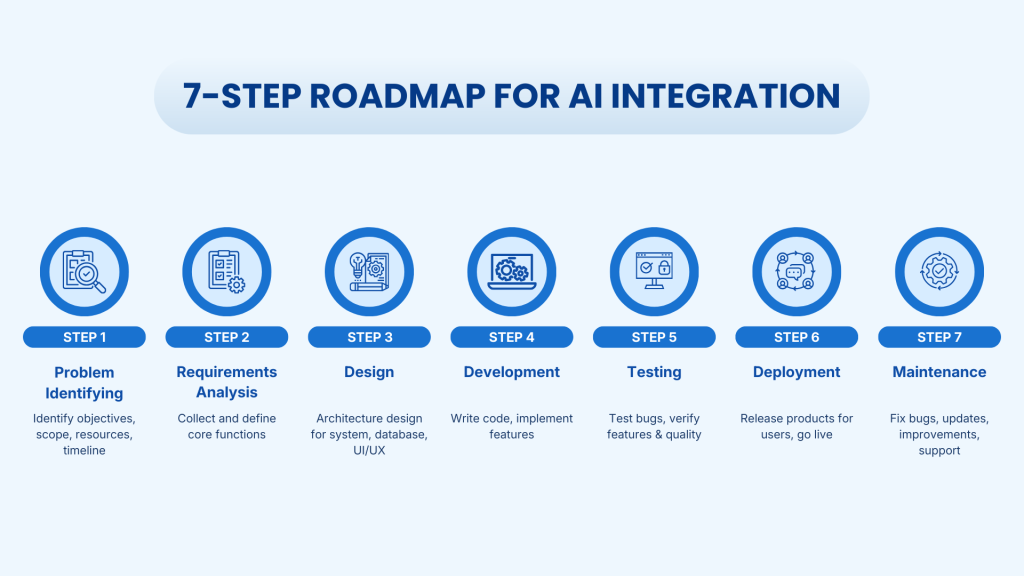
Step 1: Problem Identification
Both parties define business objectives, scope, available resources, and implementation timeline. Misalignment at this stage may result in incorrect direction or budget overruns.
Step 2: Requirements Analysis
Functional requirements are collected and clearly defined. This stage transforms “AI ideas” into concrete, buildable features.
Step 3: Design
System architecture, database structure, data flows, APIs, and UI/UX (if applicable) are designed. AI only performs effectively when placed within a well-structured system architecture.
Step 4: Development
Code is written and AI models are implemented, turning the technical blueprint into a functional system.
Step 5: Testing
Beyond bug testing, this phase includes verifying model accuracy, system performance, security, and user experience. AI-specific evaluation also involves assessing model performance metrics.
Step 6: Deployment
Once validated, the system is released into the production environment and goes live for users.
Step 7: Maintenance
AI systems are not static. They require monitoring, updates, bug fixes, continuous improvements, and periodic retraining based on new data. This determines long-term sustainability.
2. High-level system design and component workflow
After planning, enterprises must define the system at a high level to determine key components and data flows.
Case 1: 24/7 Omnichannel Chatbot
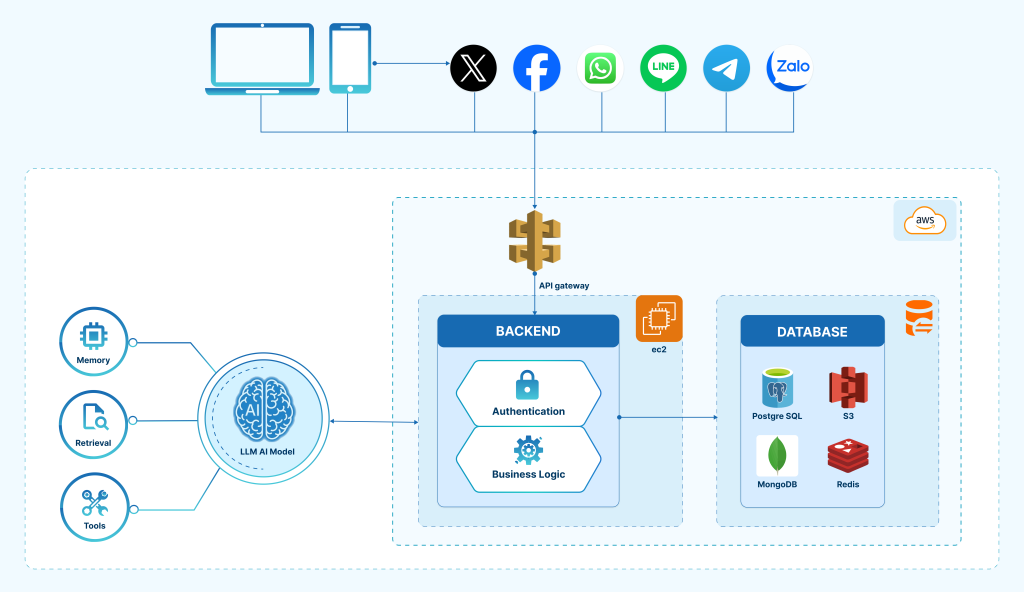
In chatbot architecture, the system includes multiple layers.
At the User Layer, customers interact through mobile apps, websites, and social platforms such as Facebook, X, WhatsApp, Zalo, or Line.
All channels connect to a centralized backend responsible for authentication, business logic processing, and database management.
Above the backend is the AI layer, including LLM AI services such as:
- Retrieval: accessing internal knowledge bases
- Tools: integrating internal APIs to retrieve real-time business data
- Memory: storing conversation context
- LLM model: generating contextual responses
The basic workflow:
User → Channel → Backend → LLM + Retrieval → Response → User
This architecture ensures AI responses are grounded in real data rather than generic language generation.
Case 2: AI-Powered Enterprise Reporting
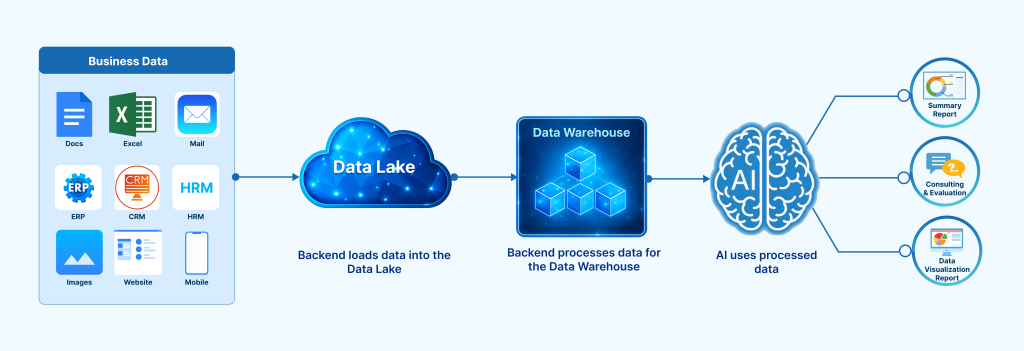
In enterprise reporting, the architecture becomes more complex due to multi-source data integration.
Data sources may include documents, Excel files, emails, ERP, CRM, HRM systems, images, websites, and mobile applications.
The backend first collects raw data into a Data Lake. The data is then processed, cleaned, and standardized before being transferred into a Data Warehouse.
AI operates on this processed data, where it can:
- Aggregate information
- Perform time-series analysis
- Detect trends
- Generate forecasts
- Provide evaluations
The results are visualized through dashboards for executive management. Beyond reporting, AI can deliver strategic recommendations based on analyzed data.
Overall workflow:
Data Sources → Data Lake → Data Warehouse → AI Processing → Visualization Dashboard → Decision Making
Case 3: Operational and Manufacturing Optimization
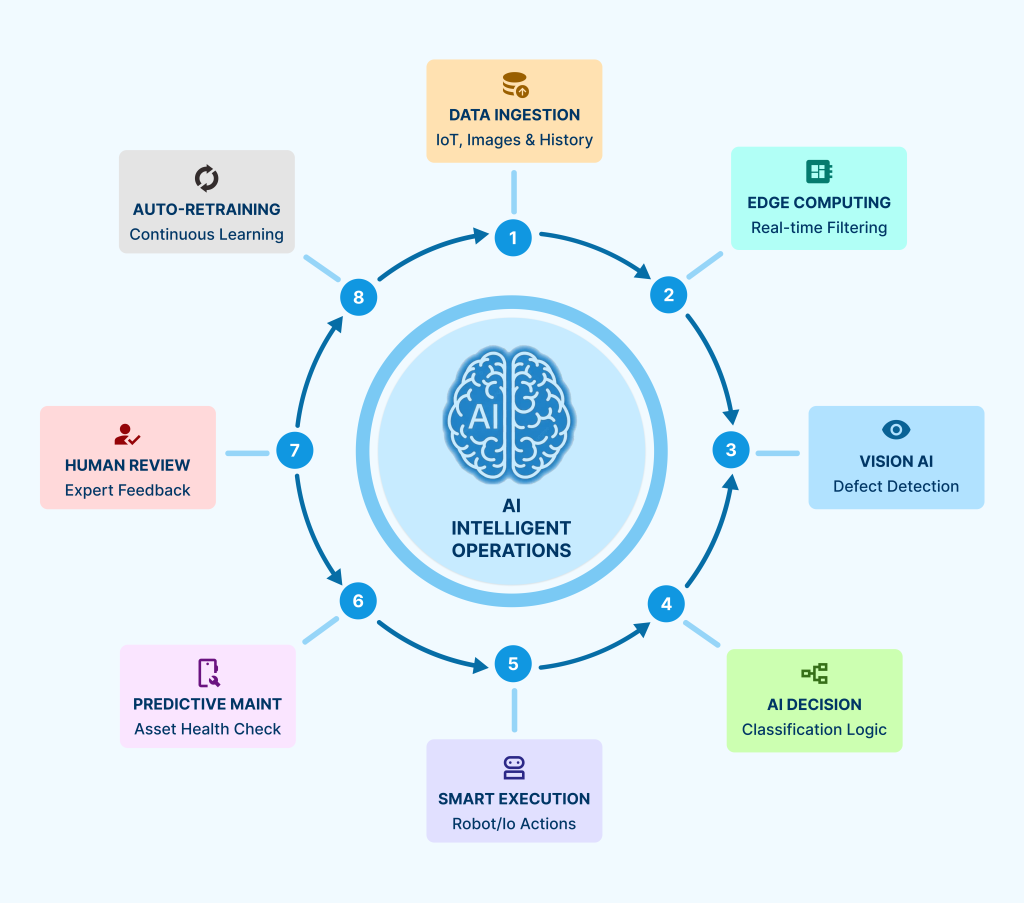
In manufacturing environments, AI architecture often includes multiple tightly integrated steps.
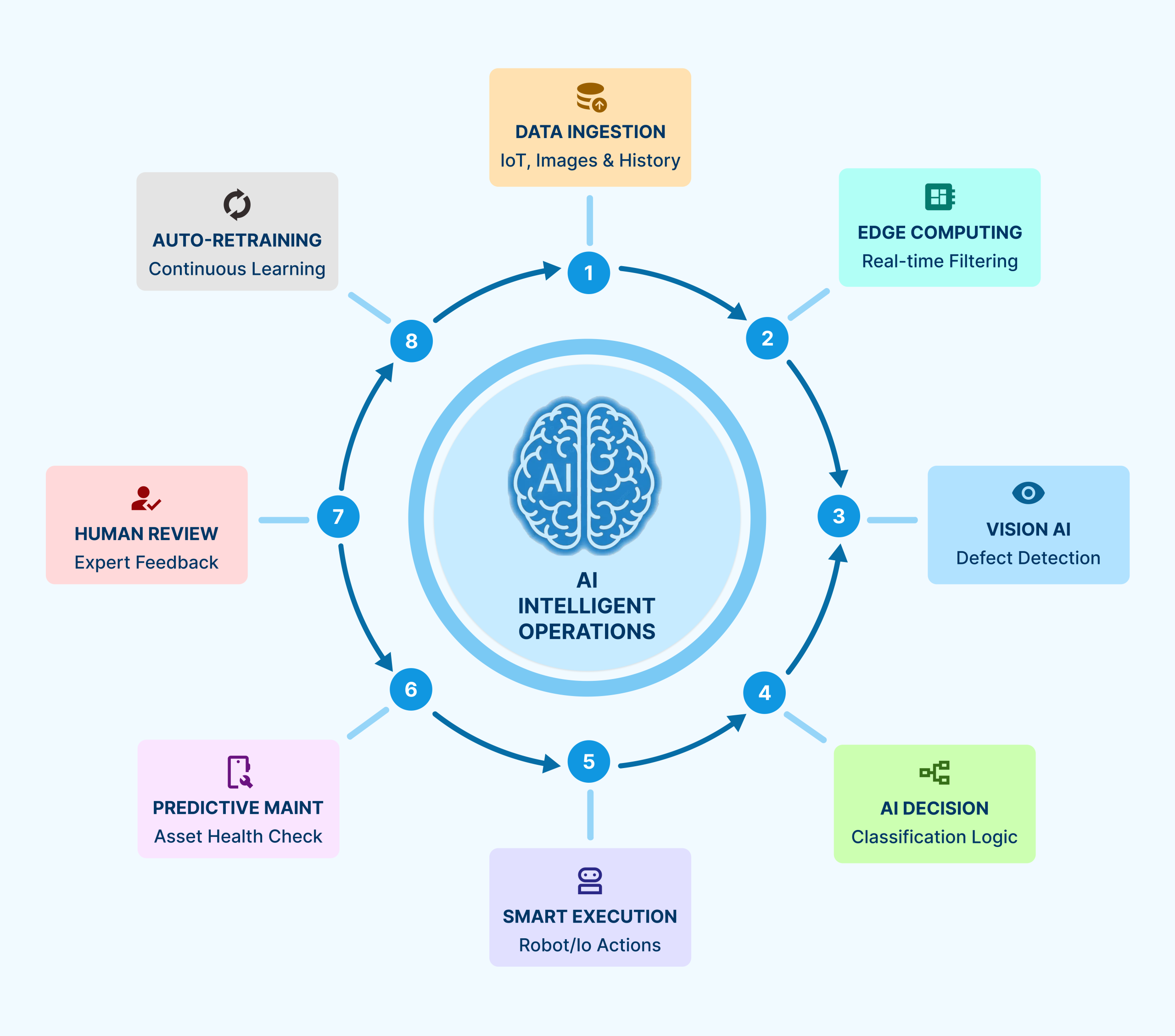
Below are the standard steps for Operational and Manufacturing Optimization within an AI system architecture:
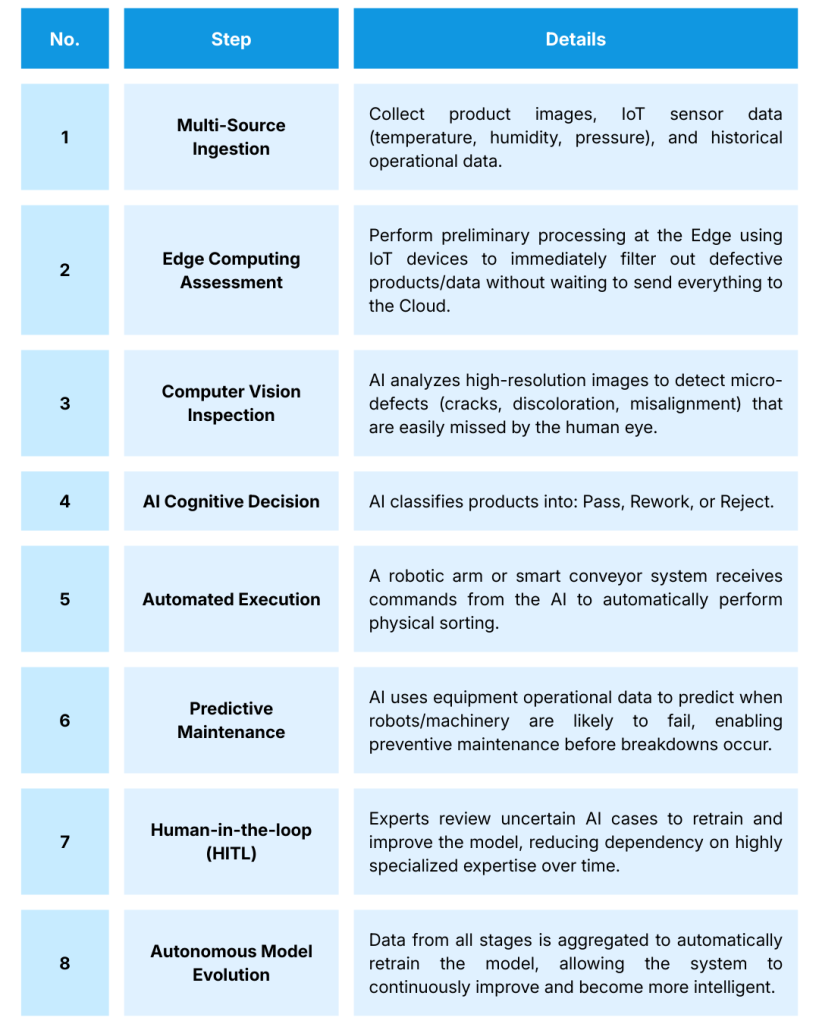
These eight steps represent not just a single computer vision model, but a complete end-to-end AI architecture.
3. Tools and frameworks by domain
Tool selection must align with the specific domain and system requirements.
Machine Learning & Deep Learning
- TensorFlow and PyTorch are widely used deep learning frameworks.
- Scikit-learn is suitable for classical ML tasks such as classification, regression, and clustering.
- XGBoost and LightGBM perform particularly well on tabular data.
- Keras provides a high-level API for building neural networks.
Natural Language Processing
- The Transformers ecosystem (Hugging Face) offers models such as BERT, GPT, and T5 for various NLP tasks.
- spaCy is production-ready for NLP pipelines.
- LangChain supports building LLM-powered applications.
- APIs such as OpenAI, Claude, and Gemini provide LLM-as-a-Service capabilities.
Computer Vision
- OpenCV is used for basic image processing.
- YOLO and Detectron2 support object detection.
- Tesseract and PaddleOCR handle optical character recognition.
- MediaPipe is suitable for real-time vision applications.
However, frameworks are merely tools. The real value lies in how they are integrated into a cohesive system architecture.
Conclusion
When implemented correctly, AI delivers sustainable long-term value. Enterprises can generate faster and more accurate reports, maintain stable 24/7 operations, reduce dependency on individuals, optimize costs, and enhance customer experience.
More importantly, AI enables organizations to transition from experience-driven operations to data-driven decision-making supported by intelligent systems.
AI does not replace humans. Instead, it acts as an intelligent layer that empowers people to focus on higher-value strategic tasks.
In upcoming articles, we will dive deeper into specific use cases such as AI-powered financial reporting, domain-specific expert chatbots, revenue forecasting, and AI + IoT applications in quality control.